

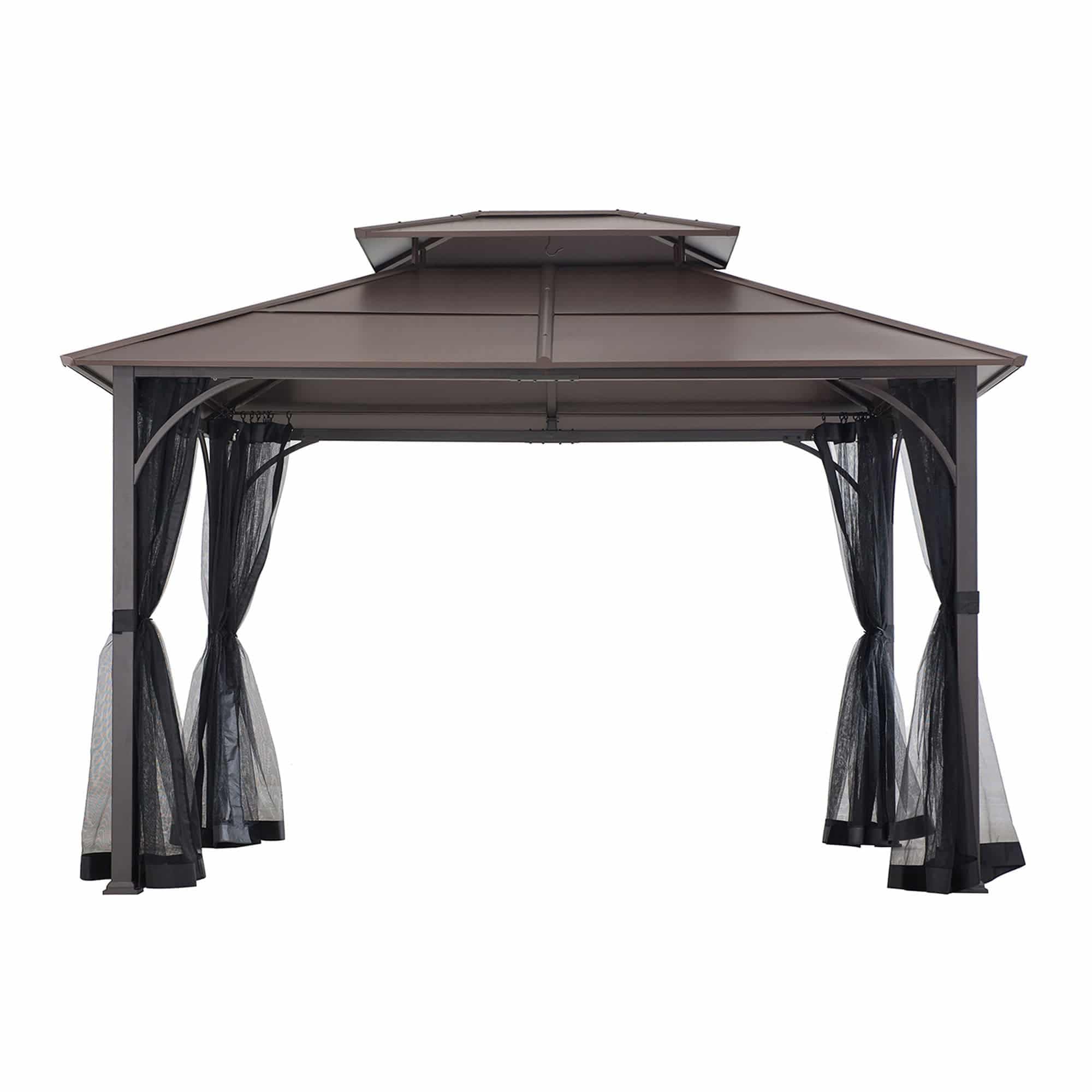
The homeowner’s decision path for Sunjoy Metal Gazebos and the seating arrangement under the roof for roof style comparisons
Choosing SUNJOY metal gazebos for a compact yard starts with the space beneath the roof, not with the product label alone. Decide what that area must hold: two chairs, a dining table, a grill, plant stands, or a flexible mix. Then measure the usable footprint, including the clearance needed to walk around the furniture. A gazebo that fits on paper may still feel cramped if the seating plan leaves no comfortable path through the space.

Start with the routine under the roof
Write down how the area will work on an ordinary day. A pair of lounge chairs needs a different arrangement from a table and several dining seats. A gardener may want open floor space for moving pots, while a host may prioritize a central table. These are planning decisions rather than product features, but they determine which dimensions deserve attention first.
For a small patio, sketch the furniture as simple rectangles before comparing listings. Mark the entrance and any fixed boundary, such as a wall, fence, or raised bed. Leave room to pull out a chair and to reach the space without crossing directly through the main seating area. This simple drawing helps prevent a common mistake: selecting a roof size based only on its outside dimensions while overlooking the arrangement below it.
Use dimensions as the first filter
The SUNJOY size guide groups examples from compact formats such as 5×8 and 7×9 through larger formats such as 12×14, 12×16, and 12×20. It associates those examples with different outdoor-space scenarios. That range gives shoppers a useful starting point for comparing the roof footprint with the intended use, but it does not establish that every model in a size group has the same interior layout or seating capacity.
For a compact space, compare the listed dimensions with your drawing before considering roof style. If the goal is a small conversation area, check whether the chosen format leaves practical circulation around the chairs. If the goal is outdoor dining, check the table length, chair positions, and access route together. The question is not simply whether furniture can fit. It is whether people can use the area without constantly moving one another’s seats.
Keep the page-listed measurement separate from your own fit judgment. The size guide can help organize the search, while the actual product page supplies the dimensions for the selected model. Treat seating capacity as a product-specific question rather than a conclusion drawn from a size label.
Compare roof labels through the seating plan
The collection uses roof-style labels including two-tier, gable, hip, and shed. These labels can help organize a comparison, but the label alone does not decide which arrangement works best. Start by asking how the roofed area relates to the furniture below it. A central dining setup, a row of lounge chairs, and a narrow seating zone each create different priorities for access and placement.
When comparing gazebos with metal roofs, keep the roof style, listed dimensions, and intended use in separate columns in your notes. The collection also labels materials such as aluminum, steel, wood, fabric, and polycarbonate or PC. Those labels describe the options presented in the collection; they do not, by themselves, confirm that every material or roof style is available on every model. Match the specific listing to the space instead of assuming that a collection filter applies across the full product range.
A roof-style comparison is most useful when it leads to a concrete layout decision. For example, note whether your seats will face inward toward a table, outward toward a view, or along one side of the footprint. Then check whether the selected product’s listed dimensions support that plan. If the arrangement depends on a particular opening, accessory, or clearance, treat that detail as a model-level check.
Review stated accessories without assuming compatibility
SUNJOY states that most metal-gazebo models include or support some combination of netting, curtains, ceiling hooks, or a double-tier vented roof. These features may affect how the space is used, especially when curtains or netting occupy the perimeter around the seating area. However, the collection-wide description does not establish that every option belongs to every model.
Read the selected listing for the exact accessory information before finalizing the layout. A curtain or netting option may change how chairs are positioned near the edges. A ceiling hook may matter if you plan to place an overhead item, but the page evidence does not establish its load limit or compatibility with every product. Keep the comparison focused on what the selected page states.
Turn the research into a short checklist
Before choosing a product, use a compact review process. It keeps the decision tied to actual use and reduces the risk of treating broad collection labels as model specifications.
- Compare the selected model’s listed dimensions with the planned seating arrangement; the size guide groups examples from 5×8 and 7×9 through 12×14, 12×16, and 12×20 formats.
- Record the roof-style and material labels shown for the specific listing; the collection includes two-tier, gable, hip, and shed roofs, plus aluminum, steel, wood, fabric, and polycarbonate or PC materials.
- Check the selected model for stated netting, curtains, ceiling hooks, or a double-tier vented roof rather than assuming every collection feature applies to every product.
First, record the measured area and draw the intended seating arrangement. Next, compare that drawing with the listed product dimensions. Then identify the roof-style label and material shown for the selected model. Finally, review any stated netting, curtains, ceiling hooks, or double-tier roof details on that product page. This sequence moves from the homeowner’s practical need to the evidence available in the listing.
Make the final choice fit the space
A sensible decision connects three things: the furniture arrangement, the product’s stated dimensions, and the features listed for the exact model. The size guide can frame the search from smaller 5×8 or 7×9 examples to larger 12×14, 12×16, and 12×20 formats, while the collection labels can help sort roof styles and materials. The final choice should still rest on the selected listing and the way people will move through the space.
For homeowners with compact outdoor areas, the best comparison is not the one with the longest feature list. It is the one that leaves a workable seating arrangement and uses only confirmed product details. Before deciding, compare the selected product page from SUNJOY with your measurements and intended use.
