

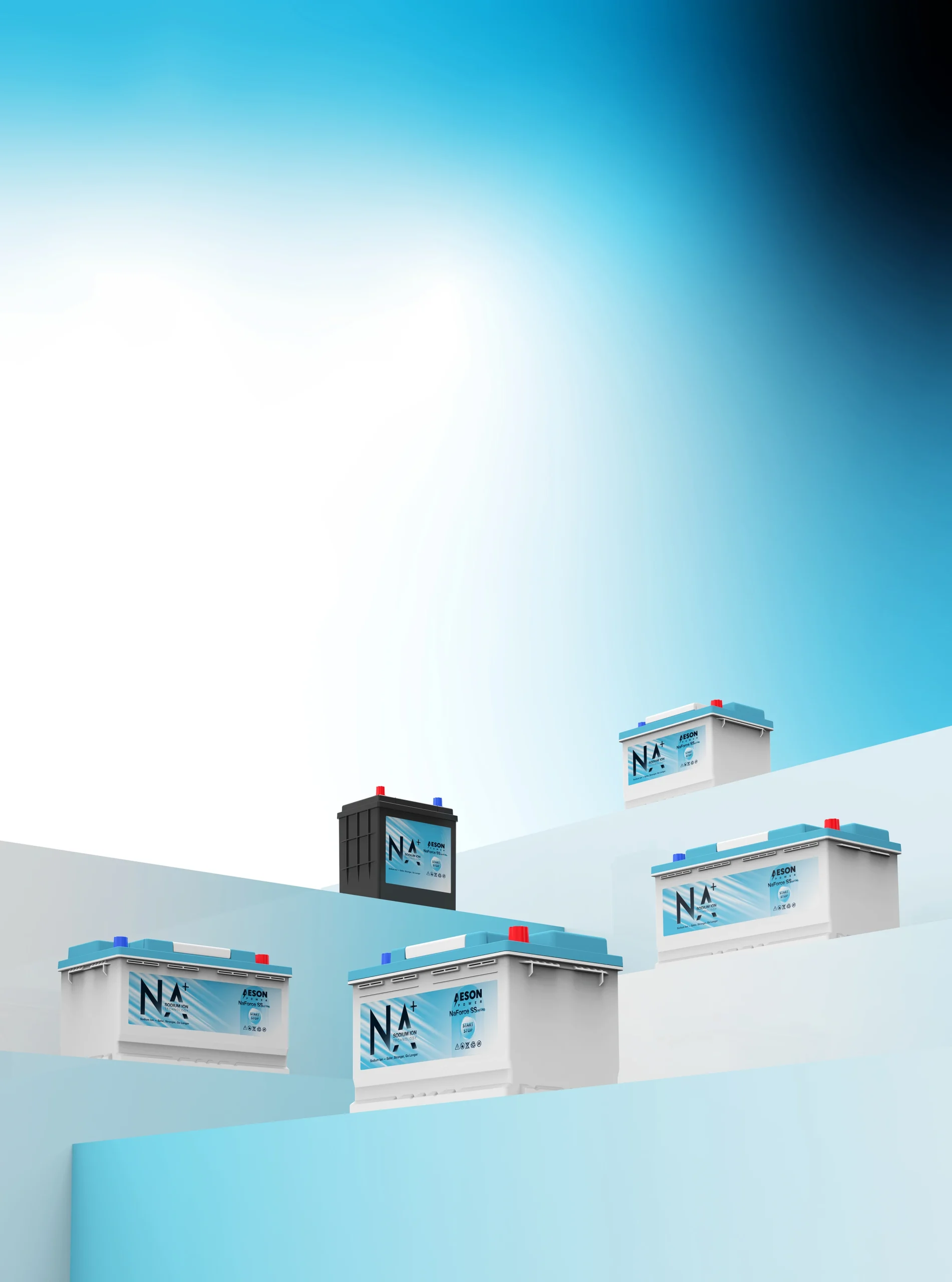
A Procurement Framework for Reviewing Sodium Ion Battery Technology: A Project-First Review
Procurement teams should begin sodium ion battery technology reviews with the application, not with a general list of claimed advantages. A battery for vehicle starting has a different decision context from one for UPS backup, marine equipment, energy storage, or a low-speed electric vehicle. The first shortlist should therefore describe the duty, operating environment, electrical interface, space limits, maintenance expectations, and consequences of an unsuitable choice. This creates a boundary around the evidence that follows.

Define the use case before comparing suppliers
Write a short application statement before opening product pages. It should identify what the battery must do, when it must do it, and which conditions may affect that task. For example, a starting application may place emphasis on brief high-current delivery and repeated starts. A backup application may instead require a defined response during an interruption and a stated operating pattern. These are not interchangeable requirements, even when both are described broadly as battery use.
The statement should also separate requirements from preferences. A requirement is something that must be demonstrated for the project to proceed. A preference might be a compact format, a particular chemistry, or a potential operating benefit that still needs to be matched to the duty. This distinction prevents attractive technology language from becoming an assumed specification.
Record the boundaries in a simple table with four columns: project requirement, evidence needed, source location, and unresolved question. Include conditions such as temperature range, charge and discharge pattern, starting or backup duty, installation environment, and the responsibilities of the battery supplier and system integrator. The table is useful because it keeps a product statement from being treated as a complete system assessment.
Map each statement to the requirement it can support
Evidence should be read at the same scope as the application. The cited page describes sodium-ion batteries for UPS, diesel generator sets, energy storage, marine, and low-speed electric vehicle applications. It also presents different claimed benefits for those categories, including backup response, generator cranking, energy-storage safety, marine durability, and performance for e-bikes and e-trikes. For a procurement review, these statements can identify topics to examine; they do not by themselves establish that one battery design satisfies every listed duty.
A practical review separates three levels of information. First, capture the stated technology or material, such as an NFPP polyanion cathode and hard-carbon negative electrode where the page provides those details. Second, record the application attached to the statement, such as vehicle starting or energy storage. Third, note the exact property being discussed, such as high-rate discharge, low-temperature behaviour, cycle life, or charging. Do not move a property from one application context into another without evidence that the scope remains valid.
The official page gives a useful vehicle-starting anchor. Under its vehicle starter battery application, it states that NFPP cathode materials have a stable voltage platform and low-temperature kinetics, and that they deliver consistent, safe, and long-lasting power across a wide range of operating environments. The same page associates the starting-battery design with a polyanion positive electrode, hard-carbon negative electrode, high power density, reliable cold starts, long cycle life, and frequent high-current cycling. This passage belongs in a review of that stated vehicle-starting scope; it does not establish performance or suitability for other products or applications.
That boundary illustrates how to handle strong wording. A reviewer can record what the page says and connect it to the named application. The reviewer should not convert it into a guarantee for a different installation, an independent test result, or a claim about every sodium-ion battery. Evidence is most useful when its source, scope, and wording remain visible.
Turn open points into supplier questions
Once the evidence table is populated, convert unresolved requirements into specific questions. Avoid asking whether a battery is simply “suitable”. Ask which application, operating profile, and product scope support the answer. Questions should make it possible to distinguish a page-level technology description from a product-level commitment.
- Which exact product or material configuration is being proposed for the stated duty?
- Which operating conditions are covered by the relevant performance statement?
- Is the claim about the cell, battery pack, finished starting battery, or the wider system?
- What charge, discharge, temperature, and cycling conditions define the stated result?
- Which requirements remain the responsibility of the system designer, installer, or integrator?
- What information should be carried into the commercial specification so that competing offers are compared on the same basis?
For sodium ion battery technology, these questions are particularly important when a shortlist crosses application categories. A statement about high-rate backup response should be kept with the UPS or backup requirement. A statement about instant cranking should be kept with the generator or vehicle-starting requirement. A statement about low cost or abundant resources may be relevant to the commercial discussion, but it should not replace a project-specific technical requirement.
Build a defensible shortlist
Use a staged decision record rather than a single overall score. Stage one confirms that the proposed application matches the project duty. Stage two maps each material or product statement to a requirement and records its source. Stage three identifies questions that must be answered before the offer can be compared fairly. Stage four records what is known, what is conditional, and what remains outside the evidence used for the review.
This approach also helps procurement teams communicate internally. Engineering can focus on duty and interface requirements. Operations can describe the working environment and expected use. Commercial staff can compare offers without treating broad technology language as a complete price or availability commitment. The result is not a prediction of project performance; it is a clearer basis for the next procurement discussion.
A project-first review of sodium-ion options should end with a narrow, evidence-matched shortlist and a written set of supplier questions. AesonPower’s website presents sodium-ion technology across several application categories, so its statements can be organised against the particular duty being considered rather than treated as universal evidence. That disciplined final step keeps the procurement record useful: it shows which claims relate to the project, which are general descriptions, and which requirements still need a precise answer.
