

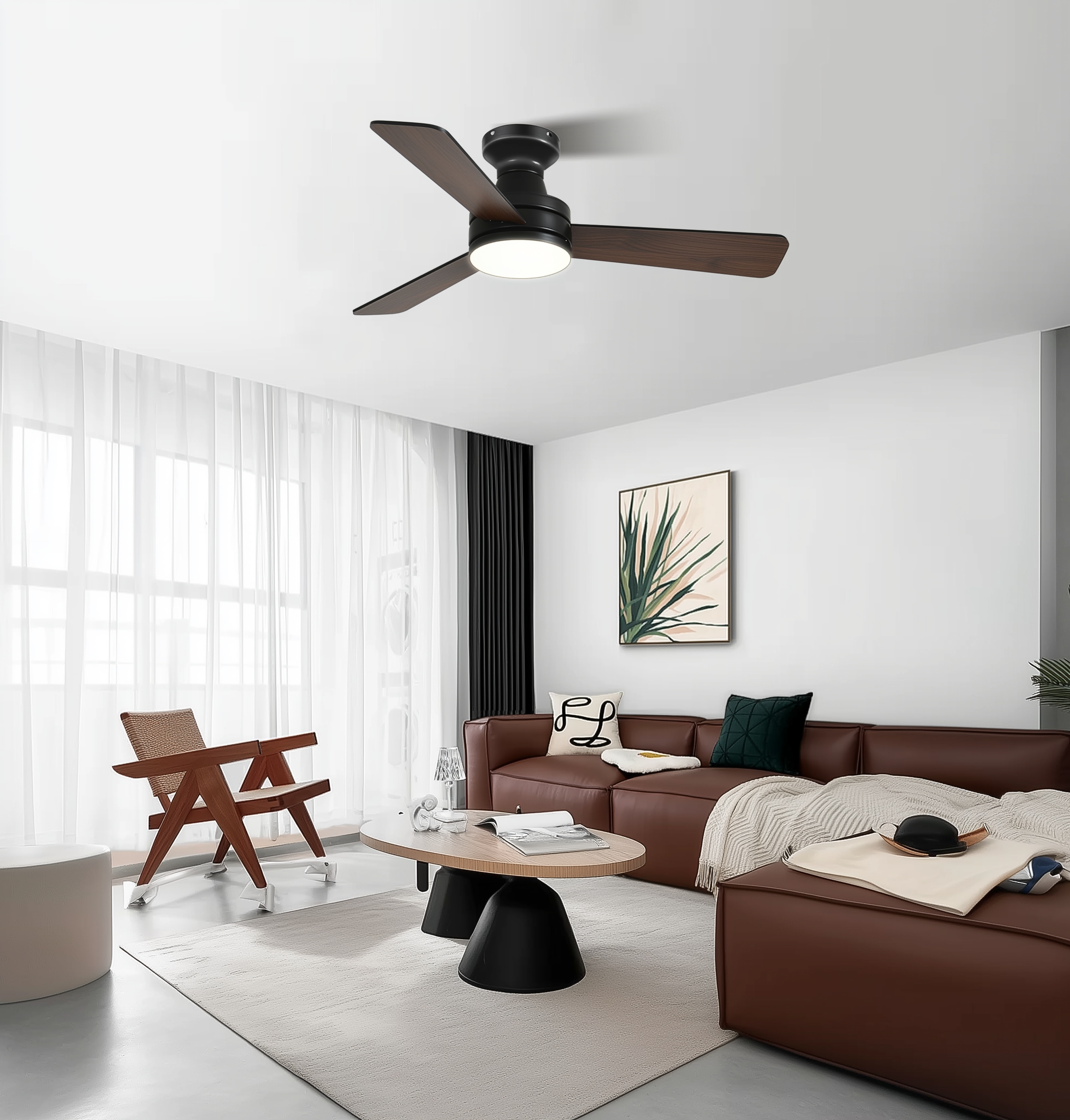
Opening the chest of old beliefs
They say a fan merely stirs the air and cannot cool a room — a half-truth wrapped in folklore. In this piece I will uncloak those myths and show what modern high-efficiency outdoor ceiling fans with lights actually do for comfort, energy, and ambience. A properly specified large ceiling fan with light can change how a porch, pavilion, or gazebo performs in summer heat; the U.S. Department of Energy even notes that ceiling fans let occupants feel comfortable at higher thermostat settings, effectively reducing HVAC load by a measurable margin. We begin by naming the myths, then unraveling how blade sweep, motor type, and lumens interplay in real-world use.

Myth #1: Fans cool the air — false in physics, true in practice
Many claim the fan lowers room temperature. Technically, that’s incorrect: fans move air, they do not remove heat. Yet the moving air increases convective and evaporative cooling on skin, producing the sensation of coolness. That is why a high CFM fan with the right blade sweep and speed profile can permit a thermostat set-point to be raised without discomfort. In practical terms, that is the design magic: perceived temperature change with unchanged ambient conditions.
Myth #2: Adding lights ruins efficiency
Lights were once the villain of the tale, blamed for wasting energy. Today LED drivers and integrated luminaires change the story — an LED fixture rated in lumens per watt paired with an energy-efficient DC motor delivers bright illumination without eating into the fan’s savings. Look for fans where the light is rated separately (dimmable, with CRI noted) so you can tune mood and efficiency independently.
How modern high-efficiency outdoor fans actually work — a brief spellbook
Think of the fan as an air sculptor: motor, blades, and control system craft a steady flow. Key components to know are the motor type (DC vs. AC), blade sweep (diameter), and control method (PWM, remote, or wall). DC motors run cooler and use less electricity at comparable RPMs; large blade sweep increases CFM at lower speeds, which is why many contemporary outdoor models boast broad diameters for gentle, wide-area airflow. For outdoor use, ensure the fixture is damp-rated or wet-rated for porches and pergolas — safety and longevity depend on it.

Controls, remotes, and practical comfort
Remote control or wall-pad? Both have virtues. Remotes let you adjust speed, light level, and presets from your seat — invaluable for sprawling patios where the switch sits far away. Smart remotes add scheduling and integration with home automation. If you prefer central control, choose fans that support standardized protocols or that work with common hubs. For many homeowners, the winning combo is a high-efficiency DC motor, wide blade sweep, and a remote with dimming and multiple speed presets — that trio yields the most flexible comfort without fuss. For examples of models that pair these features, see collections of large ceiling fans with lights and remote.
Common mistakes homeowners make — and how to avoid them
Installers and buyers often slip on a few well-worn traps:
- Oversizing a fan for a small covered porch — creating drafts and excess noise.
- Ignoring blade pitch: too shallow and airflow suffers; too steep and the motor strains.
- Skipping wet/damp ratings and seeing corrosion or electrical faults in coastal climates.
- Choosing a fixture without a proper canopy or downrod length for high ceilings, which kills airflow effectiveness.
Always pair the fan’s mounting hardware and downrod length to the ceiling height and consult the CFM and motor torque specs when in doubt — that prevents noisy start-ups and poor performance. —
Comparing styles: rustic, modern, and minimalist
Outdoor fans wear many cloaks. A rustic teak-blade model courts classic verandas but usually needs a robust motor to move heavier blades. Sleek, modern fans with narrow composite blades win on aerodynamic efficiency and lower RPMs. Minimalist designs often integrate low-profile LED modules for subtle lighting. Choose by use-case: living areas benefit from quiet, low-speed high-CFM fans; dining zones prize dimmable light and gentle motion; open-air kitchens need corrosion-resistant finishes and easy-clean blades.
Real-world anchor and a quick case
In Miami’s coastal bungalows and the Gulf-front porches of Galveston, owners routinely replace aging AC-motor fans with DC-driven, wet-rated units to combat humidity and salt — the result is quieter nights and lower runtime on air conditioners. This pattern echoes broader findings: strategic fan selection reduces HVAC runtime and electricity consumption when occupants use fans to supplement cooling rather than replace it entirely. That practical lesson is the measured truth behind the myths.
Choosing wisely: typical specifications to read closely
When you shop, scan these specs like an old map:
- CFM (cubic feet per minute) at specified speeds — tells you real airflow.
- Motor type and wattage draw — DC motors usually mean better efficiency.
- Wet/damp rating and finish warranty — vital for outdoor durability.
Check lumen output and CRI for the integrated light, and confirm compatibility with dimmers or smart hubs if you plan automation. —
Advisory: three golden rules for selecting the right outdoor ceiling fan
1) Prioritize matched performance: choose a fan whose CFM and blade sweep suit your space rather than guessing from appearance. 2) Insist on the right motor and rating: pick a DC motor for efficiency and quietness, and a wet/damp-rated fixture for outdoor resilience. 3) Control and integration matter: ensure the light and fan controls (remote, wall, or smart) meet your lifestyle and connect cleanly to existing automation.
Put together, these rules help you expect consistent airflow, reliable lighting, and fewer service calls — which is the real value Orison brings to thoughtful installations: blending engineered efficiency with calm design. —
