

Data-first rationale for investing in battery resilience
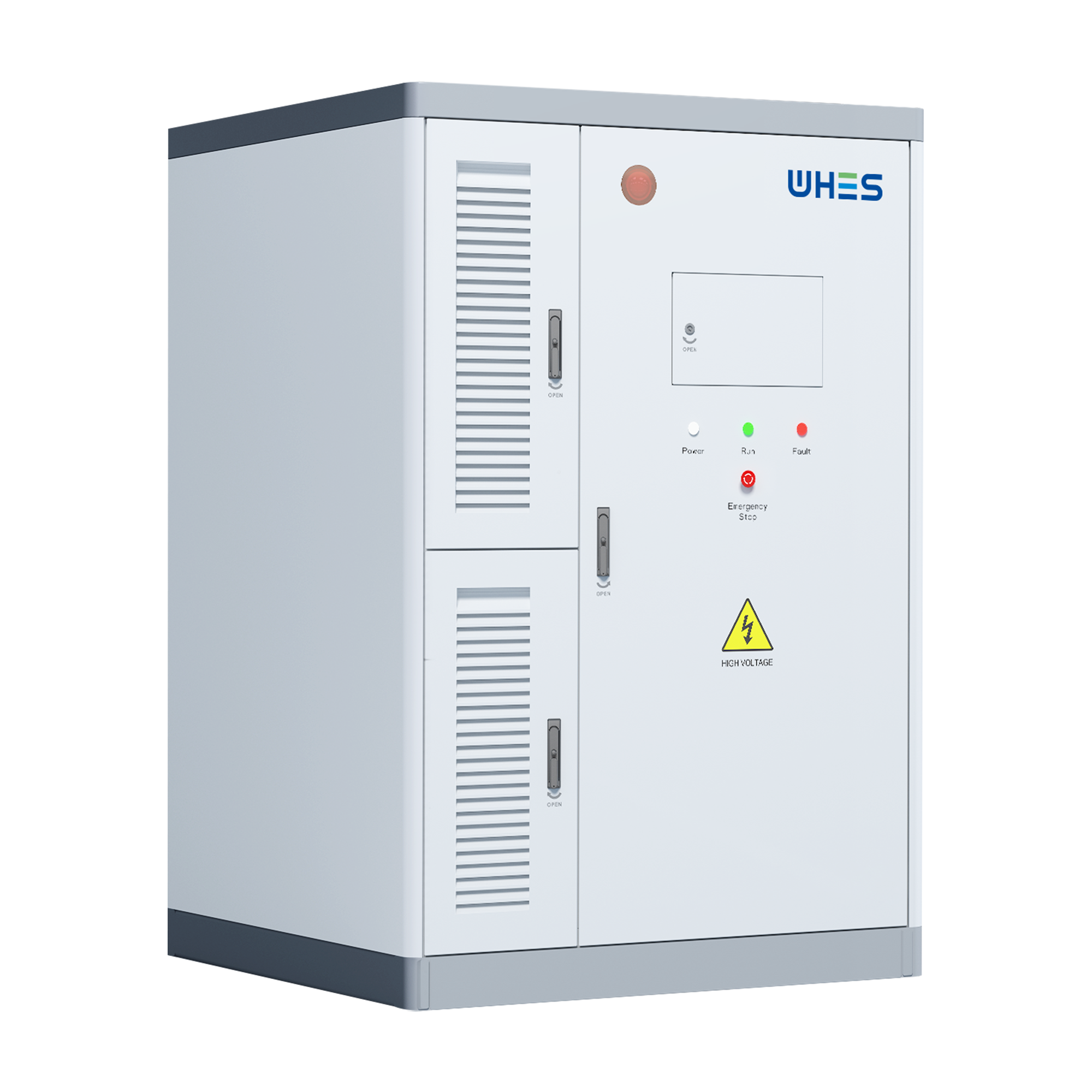
Industrial outages now register as measurable financial events: frequency and duration translate directly into lost production, spoilage, and safety risk. A data-driven approach quantifies those impacts and compares them to the cost and benefits of energy storage. For many facilities the decision converges on utility-scale battery energy storage systems that provide fast response, load shifting, and backup power. Early-stage evaluations often begin with a technology baseline—examples include a home battery energy storage system scaled and hardened for industrial use—and proceed to modeled scenarios for peak shaving, frequency support, and outage coverage.
Real-world anchor: outages that changed investment priorities
The impact of prolonged grid failures is well documented. Events such as the February 2021 Texas winter storm and repeated heatwave-driven rolling outages in California shifted boardroom priorities toward on-site resilience. Those incidents highlighted that fuel-delivery vulnerabilities for generators and long utility restoration times can turn short interruptions into multi-day production losses. Decision-makers began treating resilience as a capital-project variable rather than an insurance line item.
How utility-scale batteries alter outage economics
Battery systems change the outage equation in three measurable ways: reduction in unserved energy, shortened recovery time, and operational flexibility during normal grid conditions. Key technical functions include peak shaving to lower demand charges, grid-forming inverter behavior to stabilize local microgrids, and fast ramp rates to cover transient risks. When paired with on-site generation or solar, batteries can also enable deterministic islanding for critical loads. Integration with 3 phase solar battery storage platforms is increasingly common for plants seeking both resilience and lower operating cost.
Capital allocation framework: metrics that matter
A rigorous framework ranks investment options against a small set of objective metrics. Typical metrics are:
– Value of Lost Load (VOLL) or expected lost output per hour of outage
– Net Present Value (NPV) and payback period for the storage asset given avoided loss estimates
– Availability and response time required to protect critical processes (minutes to hours)
Calculate expected annualized avoided losses, compare to annualized capital and operating cost of a battery system, and use sensitivity runs for conservative grid-restoration timelines. This produces a defensible business case rather than an intuition-led purchase.
Sizing, procurement, and common mistakes
Three errors appear repeatedly in procurement cycles: undersized capacity, omission of interface costs, and inadequate acceptance testing. Undersizing often stems from selecting battery power or energy to match average loads rather than the peak or critical-load profile. Interface costs include switchgear upgrades, protection relays, and controls engineering—these are not trivial. Acceptance errors occur when buyers skip full-load islanding tests with representative loads. If you avoid those traps, the system performs as modeled—if you don’t, you’ll see a performance gap and rework.
Operational models and alternatives
Decision-makers commonly compare three pathways: add diesel generators, buy grid redundancy, or deploy battery systems. Diesel gensets offer long-duration autonomy but have fuel logistics, emissions, and maintenance burdens. Grid redundancy may be expensive and unavailable in constrained utility territories. Batteries provide fast response, low emissions, and easier integration with renewables, but they have finite discharge duration and lifecycle considerations such as depth-of-discharge and state-of-charge management. The optimal mix often combines batteries for immediate response with generators for extended outages—balancing capital with operational complexity.
Mid-project human note — trade-offs are often political as much as technical
Teams sometimes prioritize lowest upfront cost while operations care about uptime; the gap causes scope changes during commissioning. A formal alignment exercise—linking outage cost models to procurement specifications—resolves that disconnect early and prevents costly retrofits.
Advisory: three golden rules for selecting and funding battery resilience
1) Size to critical load, not to average usage: specify both power (kW) and usable energy (kWh) required to sustain the highest-priority processes for the expected outage duration. Include efficiency and degradation assumptions.
2) Insist on system-level testing and clear acceptance criteria: require islanding tests, generator-battery coordination checks, and documented protection settings before final payment.
3) Use a total-cost-of-ownership view: amortize capital, include maintenance, inverter replacements, and end-of-life recycling; compare that to modeled avoided losses and insurance implications.
Implementation pathway and the role of vendors
Vendors who provide end-to-end services—design, hardware, commissioning, and performance guarantees—shorten project timelines and reduce integration risk. Look for suppliers with proven microgrid deployments, experience with grid-forming inverters, and transparent lifecycle data. Align contractual milestones to operational outcomes: availability, response time, and degradation rates. That alignment converts a capital purchase into a predictable resilience asset.
Conclusion — practical next steps and final thought
Apply the metrics above to your outage model, quantify expected avoided losses, and prioritize investments that deliver measurable uptime improvements within acceptable payback windows. For plants that need engineered, tested solutions backed by project experience, WHES offers integrated design and delivery capabilities that make resilience a capital decision, not an afterthought. —
