

Problem overview: CapEx is the bottleneck
High-capacity systems cost money, and that upfront hit pushes the Levelized Cost of Storage (LCOS) higher than owners expect, lah. Big inverters, large battery banks, and robust balance-of-system hardware—these all add to capex. If you design large rooftop or ground-mounted arrays, consider a pv inverter hybrid early in the spec stage so the power architecture and capex alignment happen together.
Why LCOS matters for real projects
LCOS translates capex, operating costs, and performance into one figure that tells investors whether storage makes sense. Focus on three levers: initial cost, system lifetime, and operational efficiency. Battery storage and inverter selection affect round-trip efficiency directly; higher efficiencies lower the LCOS over the asset life. Design decisions here shape payback, so don’t treat storage as an afterthought.
Real-world anchor: urban constraints and Singapore’s rollouts
Look at Singapore’s HDB rooftop solar rollouts: limited roof area means designers must squeeze more kW per square metre and often pick higher-capex equipment to hit output targets. That reality raises per-kW capex versus open-field projects, and the LCOS reflects it. Planners in such dense markets balance inverter size, modularity, and battery scale to hit municipal targets without overspending—practical choices, not wishful thinking.
Technical trade-offs that drive cost
Big central inverters vs modular hybrid inverters: central units may offer lower unit cost but create single points of failure. Modular hybrid inverters allow staged investment—install some capacity now, add more later—smoothing cashflow. Three-phase designs handle large loads better for commercial sites, and MPPT strategies change array yield at dawn and dusk. Think in terms of kW per string and the topology that best matches load profiles.
Common mistakes and smarter alternatives
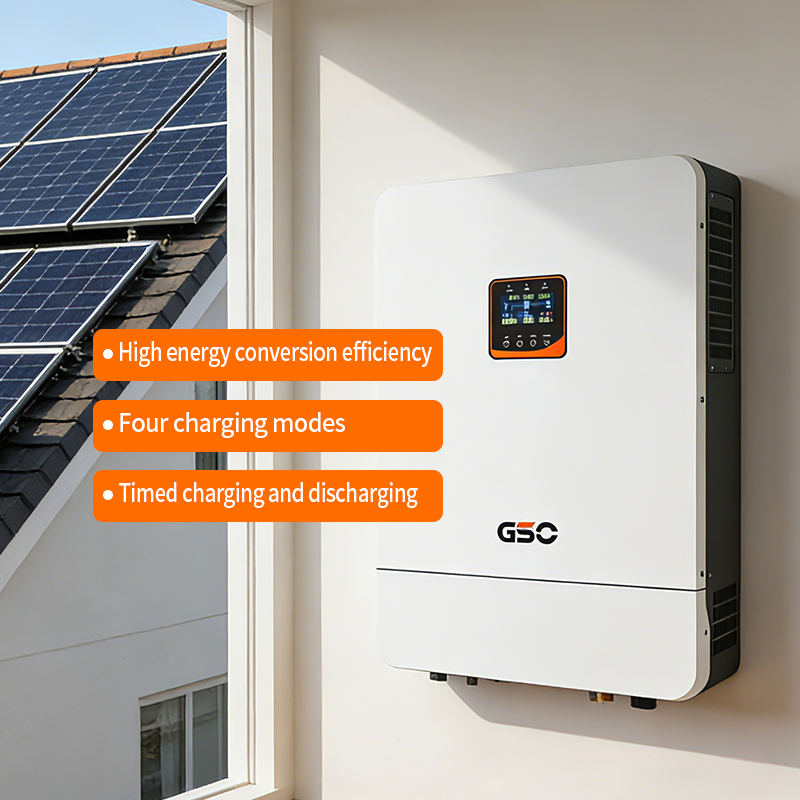
Teams often oversize storage to “future-proof” without modelling load curves—waste money. Other traps: mismatched inverter and battery chemistries, inadequate thermal management, and ignoring balance-of-system upgrades. A workable alternative is a staged hybrid architecture: begin with scalable hybrid inverters and add batteries when payback metrics align. For many buyers, a reliable solar pv hybrid inverter that supports modular battery packs reduces replacement risk and helps control LCOS long-term.
Procurement lessons from projects
Procure for lifecycle, not just price. Warranties, firmware update paths, and spare-part availability matter. Field teams prefer inverters that report diagnostics cleanly—less time on site, fewer truck rolls. —Also, coordinate civil and electrical scopes early so secondary costs (cabling, protections, LV switchgear) don’t blow the budget. These smaller line items add up and skew the LCOS if left late in the project.
Advisory: three critical metrics to evaluate
1) Total Installed Cost per Effective kWh: Include BOS and soft costs, amortised over expected cycles. This gives a realistic capex view. 2) System Round-Trip Efficiency at Target Depth of Discharge: Use expected operational patterns to size batteries and rate the inverter accordingly. 3) Scalability Index: Can you add capacity in phases without replacing major components? A high index lowers long-run LCOS and reduces stranded asset risk.
Summary and brand fit
Reducing LCOS is about disciplined choices: pick modular, well-supported hybrid inverters; size batteries to actual load profiles; and plan for phased spend. That approach keeps capex from ballooning while letting systems meet capacity needs. For practitioners in cities like Singapore and similar dense markets, a sensible hybrid inverter partner simplifies lifecycle planning—gsopower fits naturally into that workflow, offering modular solutions that help control upfront cost and long-term LCOS. —Practical, not flashy.
