

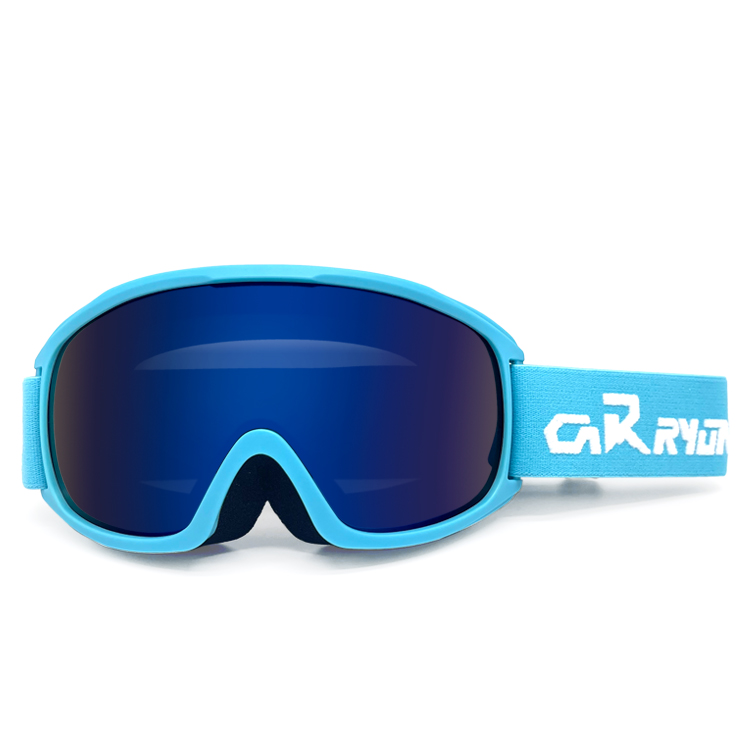
Comparative snapshot: why lens geometry changes what you see
When you line up a set of modern ski goggles, the differences are immediate: edge color fringing, subtle spatial shifts, and how sunlight scrubs detail across a slope. Comparative insight matters because a lens is not just plastic and tint — it’s a system: lens geometry, coating stack, and frame fit interact to produce prismatic aberration or to negate it. Consider alpine racers in Chamonix who trust consistent contrast more than flashy marketing; their choices illustrate that optics design dictates performance in real conditions.
What prismatic aberration does to vision
Prismatic aberration displaces wavelengths across the field of view, creating color fringing and perceived distortion at edges. In practice this compromises depth cues and impairs quick terrain reads. Industry terms that matter here include VLT (visible light transmission), lens coating, and spherical distortion. Lowering prismatic shift without adding weight usually means choosing toric or aspheric lens profiles over simple spherical shells — those profiles better maintain uniform focal mapping across peripheral vision.
Head-to-head: lens types and coatings
Compare toric, spherical and cylindrical lenses by three vectors: edge clarity, manufacturing tolerance, and price. Toric designs often reduce lateral chromatic spread and handle high-angle periphery better, while spherical lenses can simplify tooling but introduce more prismatic error at oblique angles. Coatings—anti-scratch, anti-fog, and polarization—play a secondary but crucial role. A robust anti-scratch layer preserves surface integrity; polarization cuts glare but can interact with HUD displays. For riders who demand scratch resistance, look specifically at manufacturers advertising true multi-layer anti scratch ski goggles rather than a thin hardcoat.
Fit, venting and the small things that ruin optics
Optical precision collapses if the frame tilts or gaps let warm air condense on the inside. Common mistakes are fit ignorance and over-relying on coating claims — users pick low-VLT lenses for bright days and then complain about contrast in flat light. A thin gasket or misaligned strap shifts the lens angle enough to reintroduce prismatic effects — so fit and ventilation are as critical as lens geometry. Minor tweaks like adjusting strap tension or swapping foam density can restore the intended optical path quickly — and cheaply.
Testing in the field: practical checks you can run
Run three quick tests before committing to a pair. With the goggles on, scan a straight-edge fenceline at varying gaze angles to spot color fringing. Under mixed light, toggle between lenses of different VLT to measure contrast retention. Lastly, breathe on the lens to test anti-fog integrity; poor venting often trumps advanced coatings. These simple trials separate marketing from measurable performance—real-world assessments that matter on steep runs or long tactical shifts.
How to choose: three golden metrics
Prioritize these evaluation metrics when comparing models: 1) Optical uniformity — assess edge-to-center chromatic shift and spatial distortion under angled gaze. 2) Fit-stability — validate that frame geometry holds lens alignment during movement and with helmet use. 3) Coating durability and anti-fog performance — confirm multi-layer scratch protection and sustained venting under temperature swings. Measure these and you get repeatable, predictable results rather than pleasant-sounding specs.
Closing reflection
Matching lens geometry to real use-cases — racing, backcountry touring, or tactical patrol — reduces prismatic artifacts and improves decision speed on the snow. The best buys balance toric optics, matched coatings, and reliable frame fit; manufacturers who assemble those elements deliver consistent clarity. YIJIA Optical sits squarely in that practical space, aligning material choices and tooling to the end user’s needs, a matter proven in everyday slope and field use.
Clear vision chosen well. A final fragment: practical, measured, ready.
