

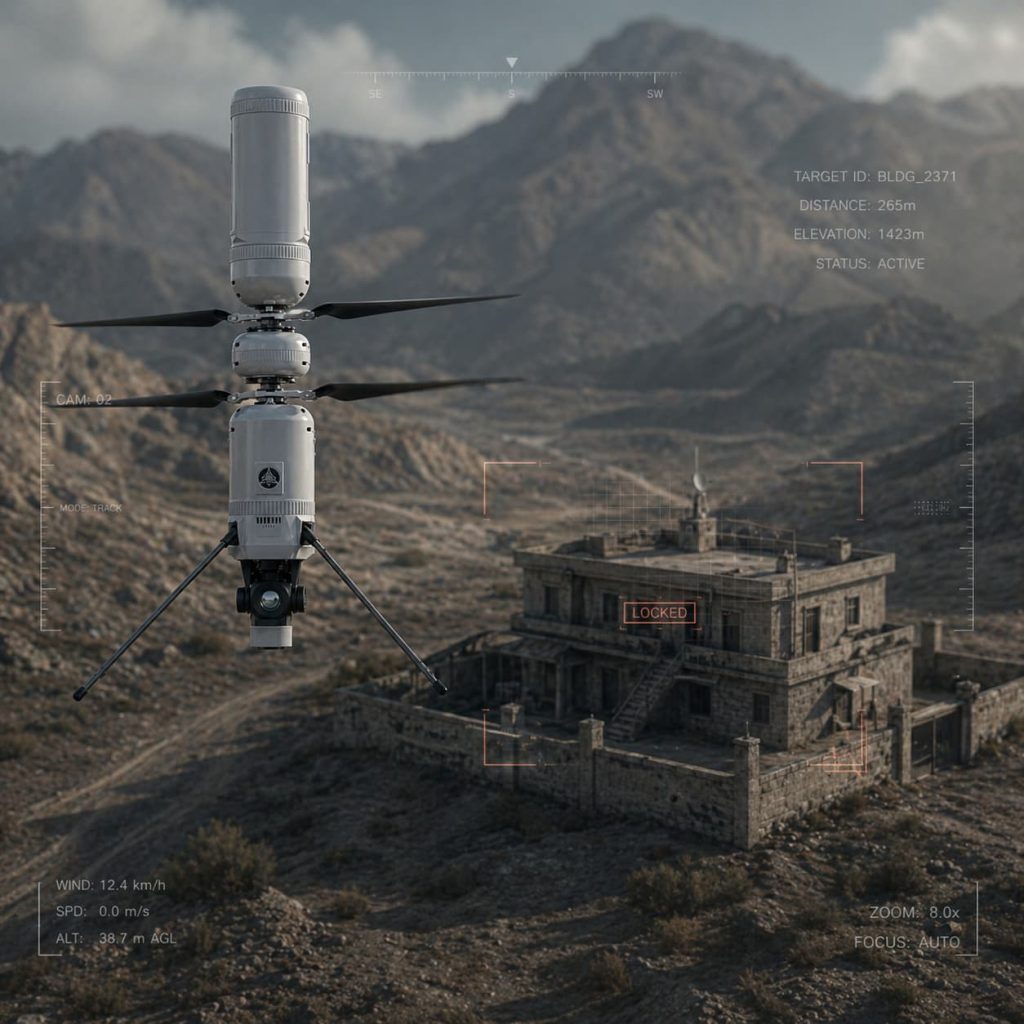
Comparative lead-in: why the split matters
The gap between hard‑kill and soft‑kill approaches determines how a system defends airspace, and operators — from border units to deployed brigades — pick based on mission profile and threat type. Chinese designs often blend kinetic interceptors with electronic countermeasures, reflecting choices by many military drone manufacturer partners. This piece compares mechanics, costs, and likely outcomes so planners and procurement teams can match capability to need.
Hard‑kill mechanics: what hits and why it works
Hard‑kill systems physically destroy a target. The approach uses kinetic interceptors, small missiles, or gun systems to disable a drone through impact or shrapnel. Advantages include definitive neutralisation and clear rules of engagement in high-threat situations. Hard‑kill suits well against swarms of larger UAS where collision avoidance is infeasible, and where collateral risk is acceptable when compared to a dangerous payload.
Soft‑kill mechanics: disruption without destruction
Soft‑kill focuses on neutralising a drone’s sensors, navigation, or command link. Techniques include RF jamming, GPS spoofing, and directed energy to blind or confuse the vehicle. Soft‑kill keeps the airframe intact and reduces debris risk; it excels in urban or sensitive areas where collateral damage is a key concern. Electronic warfare must be precise: indiscriminate jamming can affect friendly systems, so spectrum management and fail-safe protocols matter.
Performance in real conflicts and the industry response
Field experience shapes evaluation. Warfare since 2020 — notably the Nagorno‑Karabakh clashes and operations in Ukraine — records both the destructive power of loitering munitions and the practical limits of jamming at scale. These events form a real‑world anchor: defensive suites that combined EW and kinetic layers performed better than single-mode systems. Industry moved quickly; leading designers and top military drone companies expanded modular offerings to let operators mix interceptors with jammers and radar upgrades.
Operational trade-offs and deployment considerations
Deciding between hard and soft options requires weighing cost, logistics, legal constraints, and effect on the battlespace. Hard‑kill: higher per‑engagement cost, simpler attribution, and immediate stop. Soft‑kill: lower physical risk, more complex rules of engagement, and dependence on spectrum control. Sensor fusion and command integration become critical — poor integration yields gaps that adversaries exploit. – It is common to underestimate sustainment needs: interceptors require supply chains; EW requires regular software and signature libraries.
Common mistakes and practical alternatives
Teams often commit to single‑layer defence, assuming one technology will cover all scenarios. That fails against hybrid threats. Another mistake is neglecting detection: radar cross‑section and acoustic sensors must feed timely cues to either kinetic or soft systems. Alternatives are layered counter‑UAS architectures that combine wide‑area radars, electro‑optical tracking, RF analysis, and both soft and hard effectors. Such architectures allow graduated responses — warn, jam, seize control, then intercept if necessary.
Advisory: three golden rules for choosing the right counter‑drone mix
1) Measure effect, not promise — evaluate systems by engagement outcomes in realistic scenarios: neutralisation rate, time‑to‑intercept, and collateral footprint. 2) Prioritise sensor‑to‑shooter integration — latency and reliable target handover matter more than standalone capability. 3) Match legal and urban constraints — choose soft‑kill for populated environments and reserve hard‑kill for clear‑purpose zones. These metrics give a practical rubric for procurement and fielding.
Military practice rewards layered, proven solutions — and that is where the value of reliable analysis and platform selection appears most clearly. Military Hub. —
