

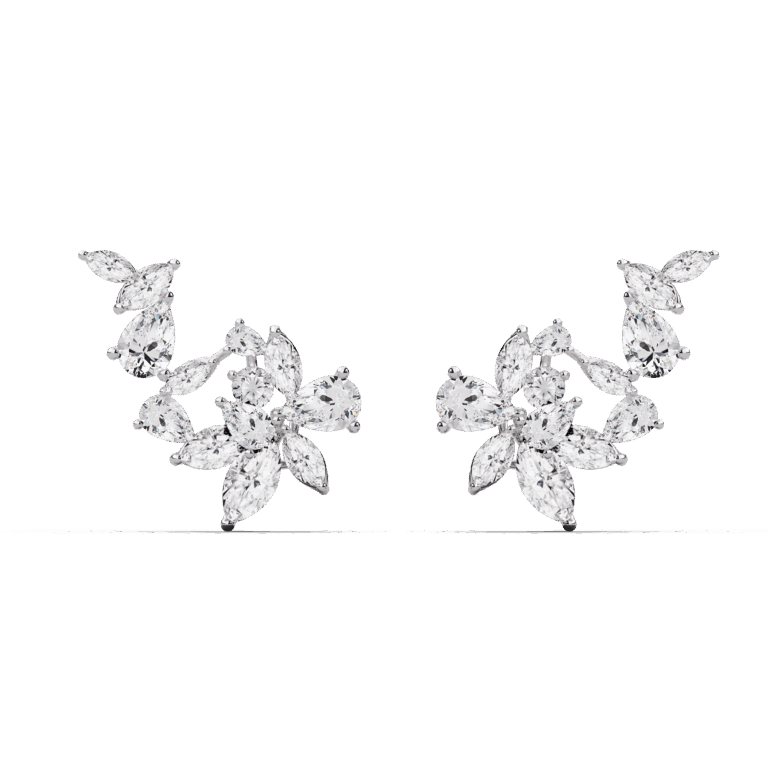
When Daily Wear Meets Legacy Sparkle
You are rushing from morning tea to a late meeting, and your earrings must keep pace without drama. Many shoppers of classic jewelry pieces want that calm reliability with real brilliance. More than half of store consultations now start with comfort checks and snag risk, even when the client is eyeing pear cut diamond earrings. The number echoes a quiet truth in boutiques: sparkle is not enough if your lobe feels sore by noon. So, how do professionals decide which silhouettes survive a sweater, a headset, and a quick phone call (yes, we all do it)? They read both the gem and the ear—weight, balance, and cut geometry. The goal is steady shine and fewer snags across a long day. And the method is simpler than it appears, though not obvious at first glance. Data points help, but so does the feel of a well-placed post and a secure tip.

Let us compare what makes a piece carry its light cleanly and sit right, and where hidden frictions creep in. Then we move to solutions that respect the stone’s story while easing real-life wear.

Hidden Frictions in Pear Cuts: A Technical Look
Why do pear tips misbehave?
Look, it’s simpler than you think. The pear’s mass is not even, so the center of gravity sits closer to the point. In pear cut diamond earrings, that means micro-rotation under movement unless the post and backing counter it. Tip protection, often a V-prong, must cover the girdle at the point without choking light from the table. If the pavilion is steep or the girdle is overly thick, the piece can feel heavier than its carat suggests and tug on the lobe. Add hair, scarves, and collars, and the tip seeks fabric—snag city. A tighter prong setting helps, but it may mute fire if it crowds the facet junctions. Clarity grade also matters: feathers near the tip can be stress points during setting and daily wear.
Traditional “fixes” bring their own flaws. Oversized backs and silicone discs add stability but can press the lobe and trap heat, causing soreness by midday—funny how that works, right? Full bezels guard the tip yet can dim brilliance and dispersion by shadowing the crown. Heavy decorative halos shift weight outwards and amplify torque. Even small misalignments between the post angle and the drop axis create a long lever that encourages twist. Pros now check a simple trio: post geometry, tip coverage, and pavilion balance. If any one is off, the earring looks lively in the case but feels fussy on the ear. The best builds keep light return high while minimizing snag exposure and ear fatigue.
Comparing What’s Next: Engineering Comfort Without Losing Fire
What’s Next
The newer approach borrows from small-batch engineering. Makers are testing micro-adjustable posts, lighter alloy blends, and slim V-caps that shield the tip without shading the crown. CAD previews model how the mass sits on the lobe and where torque peaks during a head turn—tiny changes, big relief. In this context, elongated shapes compare well. For example, marquise cut diamonds share that tapered elegance but distribute length across two points, allowing different tip protection strategies. A marquise with balanced prongs can sit flatter than a pear, while a pear, with proper post offset and a low-profile gallery, can out-sparkle in face-up brilliance. The choice becomes practical: which geometry matches your ear shape, hairstyle, and daily clothing? Small tweaks—post offset by a millimeter, a scalloped gallery that trims weight—make the piece feel easy. And yes, you will notice the difference.
So, what should you measure when choosing a comfort-first classic? Consider three metrics. 1) Stability: aim for rotation under roughly 15 degrees during a light head turn; a proper backing and correct post angle help. 2) Tip protection: a smooth V-prong or cap that covers the girdle at the point, polished to avoid fabric snags. 3) Light performance: check for even brightness across the table and crown; ask for basic images if possible, or view under mixed light to judge fire. Summed up, pears reward careful engineering, while similar elongated cuts offer alternative balances of mass and sparkle. Evaluate the fit, not just the carat, and you will keep the grace without the fuss. For thoughtful builds and clear comparisons, you may explore Vivre Brilliance.
