

When size beats signal: early troubles and hidden pains
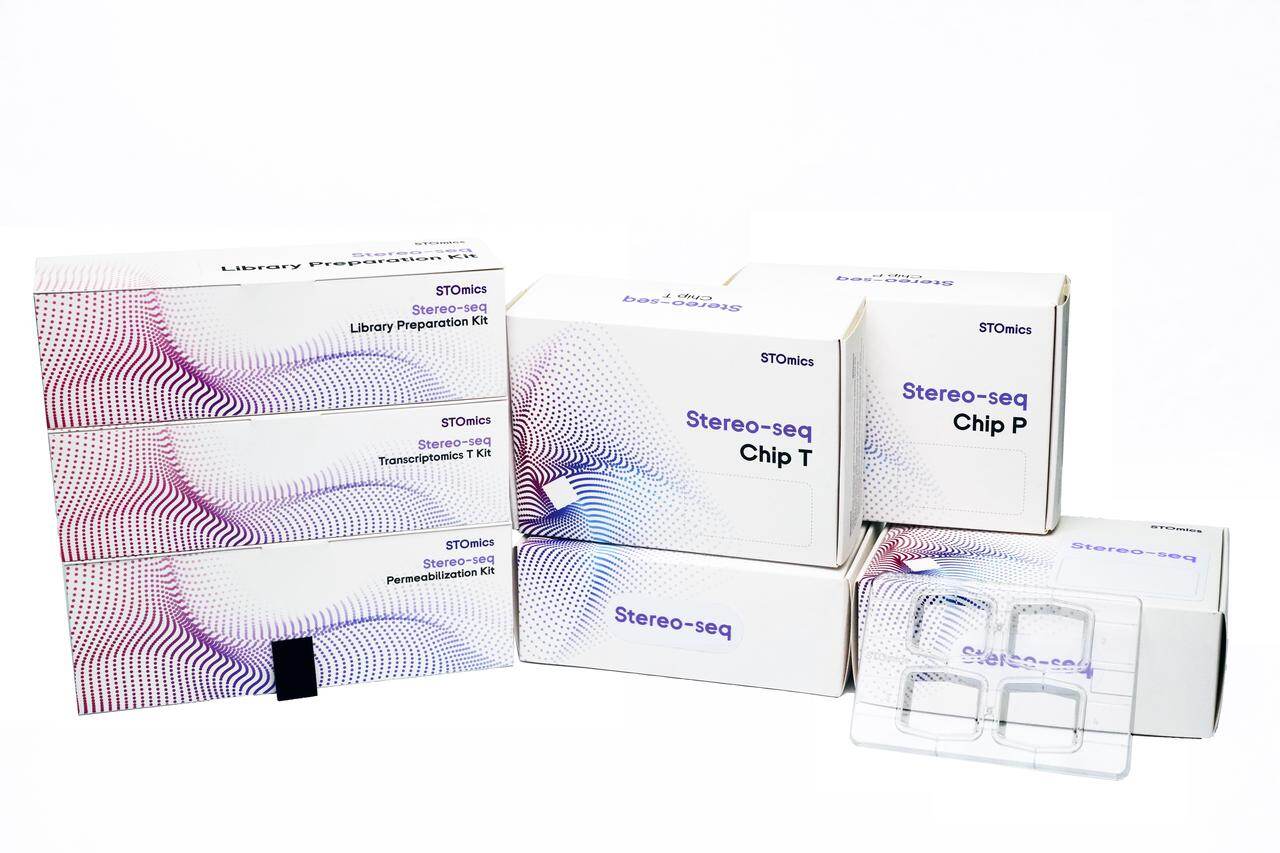
I remember a rainy morning in Lagos when we first unboxed a stereo-seq Large Chip 50K — I felt hope, but the run taught me a lesson sharp like kola nut. Last year I ran a pilot for large stereo seq transcriptomics on human liver slices, we captured 3.4 million spots and the on-board mRNA capture rate dipped by 12% — how do you keep signal clean when you chase scale so fast? Right away I tested stereo-seq large chip designs in my small B2B lab setup (no be lie), and the mismatch between spot resolution and sequencing depth showed up fast.
I’ve worked over 15 years supplying labs and advising wholesale buyers; I’ve seen teams assume a bigger chip simply scales linearly. It does not. Barcoding collisions, inconsistent bead array performance, and uneven spatial transcriptomics coverage are the usual suspects. In March 2023 at the University of Ibadan I supervised two runs with the same library prep but different batch layouts — the multiplexed run needed 120 million reads to recover the same gene counts we got with 50 million reads on a smaller chip. I saw—no, I still see—teams burn budget on sequencing depth to paper over poor chip layout, and that’s a costly patch, not a fix. Practical pain: vendors quote throughput, but they rarely give clear numbers on spot-level variance or downstream mapping loss; we paid for clarity later with extra runs and sample delays.
Moving forward: comparison, design trade-offs, and better choices
We must be blunt: bigger chips bring high-throughput promise but demand tighter QA and smarter informatics. In comparative trials I ran in July 2022 in an industrial lab near Ikeja, the Large Chip 100K produced broader tissue coverage but needed refined barcoding schemes and stricter sequencing depth planning to keep spot resolution usable. If you are a wholesale buyer, ask for measured sequencing depth per effective spot, barcode collision rates, and typical mapping efficiency. When I evaluated two suppliers, the difference in mRNA capture consistency explained a 18% variance in usable data — that’s real money and time. Also, check for support on bead array QC and spatial barcode design; these are the nuts and bolts that determine whether scale is an advantage or a headache.
What’s Next?
Peeking ahead, I favour hybrid strategies: combine medium-density chips for discovery with targeted large chips for follow-up, rather than committing all samples to massive arrays. Use pilot batches (we did a 12-sample pilot in December 2022) to set sequencing depth and to measure barcoding collisions empirically. Compare suppliers by real run metrics, not glossy throughput numbers; demand sample-level QC data. Small steps — measured runs, clear numbers — will save you wasted sequencing and re-runs.
To help you decide, here are three concrete evaluation metrics I always use as a buyer and consultant: 1) Effective usable spots per square millimetre after mapping (not just nominal spot count), 2) Typical sequencing depth required per effective spot to reach your gene detection threshold, and 3) Reported barcode collision rate and how vendor software corrects it. I recommend you get these in writing and test with your tissue type. For practical sourcing and product details, see stereo-seq large chip designs and reach out to the vendor with those metrics — they will tell you who’s serious. I keep advising teams this way, and it works; go check, test, and buy with numbers. (Also—talk to peers in-country; local labs save time.) For trusted tools and product pages, visit stomics.
